Showing posts with label reading tools. Show all posts

Tuesday, November 27, 2018

Encourage Challenged Readers with These Helpful Combos!

"If you give a mouse a cookie, he's going to ask for a glass of milk," writes author Laura Joffe Numeroff in her best-selling children's book (If You Give a Mouse a Cookie). In the same vein, if you give a child a book, there is a very good chance she will ask for another.

Books are priceless gifts that open doors to children that they might not otherwise have opened to them. Stories teach important lessons, provide escape to faraway lands and introduce children to characters that inspire and remain in their hearts for years to come. So, when it is time to think of a great gift for a child you love, think no further than a favorite book to help him remember your special thoughtfulness. Whether it is to commemorate a birthday, the Holiday Season or other important event, give a book, and chances are, you will hear about your gift often and for a long time to come.

You may wonder, "But what about a child who struggles to read or has challenges that make reading more difficult for him?" Please don't stop thinking about books as worthy gifts if this is the case. In fact, giving a book to a child with a reading challenge like dyslexia or other LD such as ADHD, autism, etc., can actually provide you with an opportunity to present an audio-book or a traditional selection accompanied by helpful reading tools. So, don't hesitate to consider the gift of one of these options that will make a child of any age smile.

Consider choosing a title with a main character that struggles with the very same reading challenge the child experiences. There are more children's books than ever before that demonstrate just how to manage and even overcome many reading and learning issues. Some attack dyslexia or ADHD head on while others infer an academic or other struggle. Whatever the case, when a child reads about a character who experiences the same issues and feelings he has, it can be the first step to helping to deal with that issue. Combine the title with helpful tools or reading aids, and you have an ideal gift option for a child who wants to read and learn with more success.

During this Holiday Season, we have gathered together a very special grouping of favorite children's selections for a variety of age groups to help you with gift giving. With books like these that are paired with innovative reading tools, not only will you be encouraging a child to read, but you will also help provide support, enjoyment, inspiration and improved self-esteem for that child. Of course, being a genuine supporter of literacy and life-long learning will be a wonderful benefit, as well. And there is always the very good chance that the child will ask for another book to read just like the mouse with the cookie and the glass of milk. Happy "Reading" Holidays, everyone!

Book & Tool Gift Sets for Challenged Readers/Learners

- Clementine (ages 6-8) by Sara Pennypacker

- My Name is Brain Brian (ages 8-12) by Jeanne Betancourt

- My Mouth Is a Volcano! (ages 5-8) by Julia Cook

- Tom's Special Talent - Dyslexia (ages 5-7) by Kate Gaynor

- Fish in a Tree (ages 10+) by Lynda Mullaly Hunt

- The Alphabet War: A Story about Dyslexia (ages 5-7) by Diane Burton Robb

- The Lightning Thief (Percy Jackson & the Olympians, Book 1)
(ages 9+) R. Riordan

- It's Called Dyslexia (Live and Series) (ages 6-9) by Jennifer Moore-Mallinos

For more information on customizable reading tools for ADHD and/or dyslexia, please visit: FocusandRead.com ---Tools for challenged readers of all ages!

Image courtesy of: Brennan Innovators, LLC and Amazon.com

Wednesday, April 4, 2018

15 Empowering Resources for Persons of ALL Ages with Autism

As many of our blog readers may know, April is World Autism Month. It is a dedicated time to help raise awareness for autism and the 1 in 68 children as well as the many adults challenged with an autism spectrum disorder (ASD). You may also know that when provided with appropriate resources and family as well as community support, persons challenged with the symptoms of autism spectrum disorders can live productive lives and in many cases thrive within their supportive communities.

It is important to also keep in mind that the right tools, strategies and resources can significantly improve one’s learning success, too, especially when reading and learning can be difficult for someone with autism, ADHD, dyslexia or other issues. If you or someone you know is challenged with an ASD, however, the significance of those tools, strategies and resources may be even more important in efforts to improve the quality of life. You may already know about physical and digital tools that effectively help challenged, unfocused readers with autism and sensory issues. A FREE list of reading and learning strategies to help persons of any age with autism (and other issues, too) can be found here.

For this article, we wanted to address the third component---resources that can actually help to EMPOWER children and adults with autism to become more confident, more socially interactive and better able to overcome their obstacles. In our efforts to write this article, we have received the assistance of Ms. Kathleen Carter, a high-school student with autism who has been a volunteer-intern-extraordinaire at EducatorLabs. She assisted the organization with its research and outreach activities.

Ms. Carter kindly provided the first six empowering resources in our list included here. We want to thank her for these good resources for autism. We have added a few more links to the list and hope that because of our combined efforts, these resources may help you or others you know in the autism community to feel empowered to become more confident, more comfortable in social situations and more independent in overcoming the challenges of autism---each and every day!

Empowering Resources for Persons with Autism

1. Autism Speaks Resource Guide
http://www.autismspeaks.org/family-services/resource-guide

2. Career Assistance for People with Autism
http://www.hloom.com/career-assistance-for-people-with-autism/

3. National Center for Autism Resources & Education
https://www.nationalautismresources.com/?utm_source=bing&utm_medium=cpc&utm_campaign=Brand&utm_term=%2Bnational%20%2Bautism%20%2Bresources&utm_content=Trademark%20-%20Brand

4. AutismNOW Transition Planning
http://autismnow.org/in-the-classroom/transition-planning-for-students/

5. Aquatic Therapy for Children with Autism
http://www.saveonpoolsupplies.com/landing/aquatic-therapy-for-children-with-autism.aspx

6. Autism Services
http://healthfinder.gov/FindServices/SearchContext.aspx?topic=81


7. Equine Therapy Programs for Children with Autism
https://www.equestriantherapy.com/equine-therapy-children-aspergers-autism/

8. Autism Resources from Easter Seals
http://www.easterseals.com/explore-resources/living-with-autism/autism-resources.html

9. Family Grant Opportunities (for Therapy, Assistive Technology, etc.)
https://www.autismspeaks.org/family-services/resource-library/family-grant-opportunities

10. Resources - Solutions to Problems in the Autism Community-US Autism & Asperger Association
http://www.usautism.org/resources.html

11. BEST Apps for Sensory Processing Issues (iPad, Android and Desktop Apps)
http://helpforstrugglingreaders.blogspot.com/2015/04/best-apps-for-sensory-processing-issues.html

12. BEST Apps for Autism(iPad, Android and Desktop Apps)
http://helpforstrugglingreaders.blogspot.com/2015/01/best-apps-for-autism-2015.html

13. NEW Reading Focus Cards App for Windows 10 PCs (via Windows Store)
https://www.microsoft.com/store/apps/9WZDNCRDF33D

14. NEW Reading Focus Cards App for Windows XP, 7, 8 & 10 PCs (via Gumroad.com)
Click on drop down to version preferred.
https://gumroad.com/l/ReadingFocusCards

15. Physical Reading Focus Cards Tools for Challenged Readers
(For Reading Actual Books & Documents)
http://www.focusandread.com/products

For more information on customizable tools for challenged readers with autism:
www.FocusandRead.com Tools for struggling readers of all ages!
www.BrennanInnovators.com Info & support for struggling readers
314-892-3897

Image courtesy of: Brennan Innovators, LLC: www.FocusandRead.com and Pixabay: https://pixabay.com

Tuesday, March 20, 2018

Launch of New Windows 10 App Helps Motivate All Ages to Focus and Read Better---Online or Offline

Finally, low-cost help for ALL readers with the new Reading Focus Cards app

As students return from Spring Break in the days ahead, they will be looking for new and better ways to resume the reading and study tasks required for a successful conclusion to the school year. Whether they are elementary, secondary, college or grad students, they will be looking for motivating ways to effectively manage the volume of reading and test prep to meet their academic goals throughout the remainder of the semester.

The new Reading Focus Cards app for Windows 10 PCs (U.S. Patent 8,360,779) can enable students to do just that---focus and read digital media with more success. The new app now accessible via the Windows Store, was designed by a St. Louis educator and entrepreneur in collaboration with a renowned developer of apps for challenged readers. (For Mac users, there is a Mac version of the Reading Focus Cards app, too.) In addition to these digital apps, sensory-appealing Reading Focus Card tools made in St. Louis are also available for use with physical books and documents, too. This system of reading aids from Brennan Innovators helps improve focus for many readers but can be especially helpful to students of all ages with ADHD, dyslexia and other issues that very often negatively impact the reading experience.

Brennan Innovators, LLC, a leading innovation-driven provider of reading solutions for all ages, announced that it has published its new Windows 10 Reading Focus Cards app (U.S. Patent 8,360,779) for readers of online and offline digital media. This application for use with Windows 10 PCs was made possible by combining the efforts of an innovative developer of special needs apps together with those of an experienced St. Louis educator and entrepreneur. The launch of the Reading Focus Cards app for Windows 10 more easily enables PC users to read digital text with more focus, visual comfort and improved reading skills.

Established in 2007, Brennan Innovators is a U.S. educational products and services company with a proven track-record of successful development and commercialization of teacher-designed reading tools for mainstream use as well as readers with special needs. All the company’s reading products are made in the U.S.A. Brennan Innovators also provides consultation and professional educational services for teachers, parents and other adults who serve students in grades K-12.

Speaking on the development of the app, Joan M. Brennan, founder and CEO of Brennan Innovators, LLC, said, "This infinitely-customizable app FLOATS on top and STAYS on top of underlying digital applications (Kindle PC app, etc.), enabling readers to FOCUS on digital text needing immediate attention AND BLOCK OUT surrounding text that may be distracting. The app is great for e-books and online courses read on PCs, too. The launch of this innovative overlay application continues our commitment to explore new and innovative pathways in reading technology with an emphasis on support for challenged readers of all ages/abilities and, thereby, improvement of their self-esteem. Reading success and the skills related to it are the cornerstones for success and achievement in life. We are excited to add this new Windows 10 version of the Reading Focus Cards app to our portfolio of customizable and sensory-appealing reading solutions."

Ms. Brennan, an experienced middle-school teacher, created the original Reading Focus Cards (U.S. Patent 7,565,759), physical reading aids that grew out of the students’ needs in her own classroom. Throughout 2017, she worked with Abelardo Gonzalez, a developer of apps for dyslexia (OpenDyslexic font) and other reading challenges, to create the new Windows 10 Reading Focus Cards app for PCs. First established in 2014 for the first version of the app for Macs and PCs, their collaboration has worked well to support Brennan Innovators’ mission of providing tools to enable ALL individuals to focus and read with more success. The new app is available in the Windows Store. The Mac version of the desktop app is available in the Mac App Store.

To view a VIDEO of the new Reading Focus Cards app for Windows 10 in action, please visit https://goo.gl/YftDve.

Resource Links

1. NEW Reading Focus Cards App for Windows 10 PCs (via Windows Store):
https://www.microsoft.com/store/apps/9WZDNCRDF33D

2. NEW Reading Focus Cards App for Windows 10 PCs (via Gumroad.com):
Click on drop down to version preferred.
https://gumroad.com/l/ReadingFocusCards

3. VIDEO of NEW Reading Focus Cards App for Windows 10 PCs:
https://goo.gl/YftDve

4. Reading Focus Cards App for Windows 7 & 8 (via Gumroad.com):
Click on drop down to version preferred.
https://gumroad.com/l/ReadingFocusCards

5. Reading Focus Cards App for Macs (via Mac App Store):
https://itunes.apple.com/us/app/read-and-focus/id920617853?mt=12

6. Physical Reading Focus Cards Tools
(For Reading Actual Books & Documents)
http://www.focusandread.com/products

For more information on customizable tools for ALL kinds of readers:
www.FocusandRead.com Tools for struggling readers of all ages!
www.BrennanInnovators.com Info & support for struggling readers
314-892-3897

Image courtesy of: Brennan Innovators, LLC: www.FocusandRead.com and Pixabay: https://pixabay.com

Wednesday, January 17, 2018

How Can I Help a Child with Convergence Insufficiency (CI)?

In recent weeks, we have been receiving more than the usual requests for information and resources about an eye condition called convergence insufficiency (CI). Because we have not published an article on this topic since 2012 with Helpful Apps & Resources for Convergence Insufficiency, we thought it was time with the New Year to provide our readers with the latest information, strategies and other resources on this subject of CI.

What IS Convergence Insufficiency? (CI)

Convergence insufficiency is a condition in which the eyes are unable to work together when looking at nearby objects. This condition causes one eye to turn outward instead of inward with the other eye creating double or blurred vision.

Convergence insufficiency is usually diagnosed in school-age children and adolescents. It can cause difficulty reading, for which parents or teachers might suspect the child has learning difficulties rather than an eye disorder.

Treatments are usually effective for convergence insufficiency.

Symptoms and Causes of Convergence Insufficiency (CI)

Not everyone with convergence insufficiency has signs and symptoms. Signs and symptoms occur while you're reading or doing other close work and might include:

-Tired, sore or uncomfortable eyes (eyestrain)
-Frequent headaches
-Difficulty reading — words seem to float on the page, loss of place or reading slowly, which might cause one to avoid reading or not complete schoolwork
-Double vision (diplopia)
-Difficulty concentrating
-Squinting, rubbing or closing one eye

The cause of convergence insufficiency is actually not known, but it involves a misalignment of the eyes when focusing on nearby objects. The misalignment involves the muscles that move the eye. Typically, one eye drifts outward when you're focusing on a word or object at close range.

If you or your child experiences the symptoms of convergence insufficiency or problems reading, consult an eye care professional for a comprehensive exam — a developmental/behavioral optometrist or an ophthalmologist.

Diagnosis of Convergence Insufficiency (CI)

Individuals with convergence insufficiency might have otherwise normal vision (20/20), so it is important to mention reading or learning concerns to your eye care provider. To diagnose convergence insufficiency, the eye doctor might:

1. Request a medical history. This might include questions about problems with focusing, blurred or double vision, headaches, and symptoms.

2. Measure the near point of convergence. This test measures the distance from the eyes to where both eyes can focus without double vision. The examiner holds a small target, such as a printed card or penlight, in front of the patient and slowly moves it closer until either double vision is experienced or the examiner sees an eye drift outward.

3. Assess positive fusional vergence (PFV). During this test, the patient is asked to read letters on an eye chart while looking through prism lenses. The examiner will note when you begin to have double vision.

4. Perform a routine or comprehensive (recommended) eye exam. If patient has any other vision problems, such as nearsightedness, the doctor might conduct tests to assess the degree of the problem.

Recommended Treatment of (CI)

Eye coordination problems like convergence insufficiency generally cannot be improved with eye glasses or surgery. A program of vision therapy may be needed to improve eye coordination abilities, reduce symptoms, and alleviate discomfort when doing close work.

The American Optometric Association and the 2008 Convergence Insufficiency Treatment Trial clearly support the superiority of office-based vision therapy, supplemented by at-home vision therapy (i.e., prescribed eye exercises, etc.), for treatment of convergence insufficiency.

If convergence insufficiency is not causing symptoms, treatment is generally not needed. However, for persons with symptoms, treatment that include eye-focusing exercises can increase the eyes' convergence ability.

Treatment of CI, which can take place in the office of a trained therapist or at your home, might include:

1. Pencil Pushups: In this exercise, the patient focuses on a small letter on the side of a pencil as it is moved closer to the bridge of the nose, stopping as soon as double vision is experienced. The exercise is often done for 15 minutes a day, five or more days a week.
2. Computer-generated Vision Therapy: Eye-focusing exercises are done on a computer using software designed to improve convergence. The results can be printed to share with the eye doctor.
3. About Reading Glasses: Glasses with built-in prisms generally haven't proved effective. If the patient has another focusing or vision problem, such as not seeing well close up (farsightedness), reading glasses might be prescribed.

Recent studies indicate that office-based therapy with home reinforcement is the most effective treatment for convergence insufficiency. Home-based treatment with pencil pushups or computer programs hasn't been shown to be as effective. But home treatment costs less and is more convenient and more readily available.

Treatment for convergence insufficiency might take three months or longer. Treatment can resolve convergence insufficiency, but symptoms might recur after illness, after lack of sleep, or when you're doing a lot of reading or other close work. Discuss treatment options with your eye care professional.

In the meantime, teachers can do much to enable students to manage CI symptoms and other reading challenges in the classroom. Here is a list of practical strategies to help alleviate some of the discomfort and focusing issues of CI:

7 Classroom Modifications to Help Students with Functional Vision Problems

Provide Better Lighting

Many classrooms are poorly lit with flickering fluorescent bulbs. Even when this type of lighting is functioning properly, the glare created by the fluorescent bulbs makes it very difficult for readers with challenges. Schools often need to make the most economical choices, and fluorescent lighting is cheap. However, proper lighting is particularly important for students with vision problems. We suggest providing natural lighting or full-spectrum bulbs whenever possible. On a nice day, a child could sit near the window in the sunlight or at a table with a full-spectrum lamp, especially when doing sustained close work. In addition, to alleviate the "harshness" of fluorescent lighting in a classroom, some teachers drape softly-colored, open-weaved fabric (not flammable) under the lighting fixtures on the ceiling but at a safe distance from them.

Provide Periodic Work Breaks

Sustained near-field work that requires a student to keep both eyes pointed in the same direction (a function known as teaming), follow along the text (a function known as tracking), and focus on text or numbers for an extended amount of time (a function known as “accommodation”) is challenging for children with vision problems. These functions work effortlessly for children with healthy vision systems, but children with vision deficiencies need to put forth extra effort. Allowing students to take breaks regularly gives their eyes time to rest so they can begin working again refreshed.

Provide Oral Testing Options

For children with vision problems, reading and writing causes strain and even headaches; so sometimes these students get distracted or give up while taking a test. If you’ve ever studied with your child for an exam, certain he would ace it, only to find out later that he failed, a functional vision problem could be interfering with his test-taking performance. Bubbling in answer sheets can be a particular challenge. Allowing students to demonstrate knowledge through oral quizzes and tests when possible is often a helpful solution.

Grant More Time for Completion of Work

Often, classroom exams and assignments are either intentionally timed or students are hurried on to the next task due to schedules and general time constraints of the school day. A child with a learning-related vision problem may need more time to learn, complete assignments, and take tests. This has nothing to do with intelligence; it’s simply a matter of the way their vision system functions. Granting extra time can boost their performance.

Use Highlighters

When you were in school, did you ever use highlighter markers or pencils to underline important text? When you’re reading, do you ever slide your finger or pen along text as a guide, especially when you’re getting tired or trying to concentrate on challenging material? Allowing a child with an eye tracking deficiency to use highlighters as they read is a simple but effective classroom modification. Readers with normal healthy visual processing systems can easily move their eyes in a left to right manner across the page without skipping words or losing their place. Highlighters can make it easier for your child to stay on track.

Make Larger Text Available

Children with learning-related vision problems strain to read standard-sized text more so than their classmates with healthy vision systems. Larger print is easier to read, focus on, and follow along, smoothly and efficiently. Text on worksheets and exams can be enlarged simply by using larger font or blowing up the copy size. The school may be required to accommodate your child’s needs by ordering large-print textbooks when available. You can also buy large-print books for your child to read at home or check them out from the library.

Limit Copying From Board

Copying from the board or screen can be difficult for a student with a vision problem, even if he has 20/20 eyesight or wears eyeglasses. When a child has trouble focusing, he may see clearly while looking down at his paper, and clearly while looking up at the board. However, looking up and down, back and forth, from the board to the paper might be where the challenge comes into play. The focus mechanism in a child’s eyes might be weak, slowing down the adjustment period as he looks from one point to the other. Arrange for seating closer to the board for some relief, or preferably provide the child with printed materials from which to copy.

If a child has a learning-related functional vision problem, simple classroom and learning environment modifications can provide much-needed relief as he tries to cope. The first step is to obtain a professional diagnosis by scheduling a functional or comprehensive vision exam with a developmental or behavioral optometrist. Then work with the school teacher and school to ensure appropriate modifications are made available.

These classroom modifications may be temporary, because an individualized vision therapy program can improve functional vision significantly.

Sources

Convergence Insufficiency (Symptoms & Causes) - from Mayo Clinic
https://www.mayoclinic.org/diseases-conditions/convergence-insufficiency/symptoms-causes/syc-20352735

Convergence Insufficiency (Diagnosis & Treatment) - from Mayo Clinic
https://www.mayoclinic.org/diseases-conditions/convergence-insufficiency/diagnosis-treatment/drc-20352739

Home-Based Therapy for Convergence Insufficiency-NOT EFFECTIVE!- by Lynn Hellerstein
http://lynnhellerstein.com/home-based-therapy-for-convergence-insufficiency-not-effective/

Dyslexia, Really? Convergence Insufficiency: the REAL Story- by Robin Pauc (Kindle Edition)
https://www.amazon.com/Dyslexia-Really-Convergence-Insufficiency-story-ebook/dp/B0055T3AD0/ref=sr_1_2?s=books&ie=UTF8&qid=1516115126&sr=1-2&keywords=convergence+insufficiency

What is Convergence Insufficiency (CI)? - from Optometrists Network
http://www.convergenceinsufficiency.org/

Convergence Insufficiency - from COVD (College of Optometrists in Vision Development)
http://www.covd.org/?page=Convergence

Doctor Locator Tool - from the COVD (College of Optometrists in Vision Development)
Locate a Doctor in your area who is experienced and knowledgeable in diagnosing and treating convergence insufficiency.
http://locate.covd.org/

7 Classroom Modifications to Help Students with Functional Vision Problems
http://www.visuallearningcenter.com/7-classroom-modifications-to-help-students-with-functional-vision-problems/

65+ Convergence Insufficiency Resources (Many are FREE!)
https://goo.gl/SLsiGV

Helpful Apps & Resources for Convergence Insufficiency
http://helpforstrugglingreaders.blogspot.com/2012/11/helpful-apps-resources-for-convergence.html

For more information about tools, strategies and resources for CI and other reading challenges, please visit:
www.FocusandRead.com Tools for struggling readers of all ages!
www.BrennanInnovators.com Info & support for struggling readers
314-892-3897

Image provided by: Brennan Innovators, LLC www.FocusandRead.com

Wednesday, July 26, 2017

More Fluency Results in Improved Reading Rate, Comprehension and Retention, too!

Most educators know that a variety of skills come together to enable a student to read and so so proficiently. Those same educators will cite the specific reading skills required for this to be accomplished.

The right tools, strategies and teaching techniques can make all the difference in successfully developing and improving these skills in emergent as well as experienced readers. The following is a list of basic or primary reading skills needed for effective reading to result:

Primary Reading Skills

1. Phonics: To know the relationship between the sounds of spoken language and the letters of written language is essential for reading.

2. Word recognition: Many common words in English, such as "the" and "one," do not fit the normal phonics rules, so your child will need to memorize them.

3. Fluency: To read fluently, your child must not only be able to recognize words instantly, but also be able to divide the text into meaningful chunks.

4. Spelling and writing: Your child increases his knowledge of how print works when he spells and writes on his own. When he sees each letter, he learns to associate a sound with it. At first he may write "book" as bk — because he hears the /b/ and /k/ sounds. With instruction, he learns correct spelling.

5. Comprehension: To read, your child must understand the meaning of the words. She builds comprehension when she discusses what she thinks a book will be about and summarizes what happened in a story. Her understanding increases as her vocabulary expands.

In this article, our focus in on fluency (#3 above). We wanted to provide resources and information to help with the improvement of this all-important reading skill of recognizing words instantly and dividing them into meaningful chunks. Developing fluency does not simply require the teacher or parent to "force feed" a group of words or text to a child. It most definitely does not involve "speed reading" or increasing the rate of the words viewed by a reader, which many software programs attempt to do. The teaching of fluency requires specific activities and resources to encourage a child to attack the text needing to be read.

In a 2011 focus study of secondary students who were challenged readers, it was found that when implementing the appropriate strategies and tools, reading fluency improves, which in turn significantly improved the student' reading rate and comprehension. For more information on this study, please visit this link.

So, in our attempt to help parents and teachers with the development and improvement of reading fluency, we have provided here a list of resources and links to assist you. We hope you will discover that the following links will help your child or students do just that---Improve fluency so that reading rate and comprehension will follow. In the end, retention of what has been read will also be positively impacted with these improvements.

Reading Fluency Resources

Fluency Resources for Reading - from Brennan Innovators, LLC
70+ reading fluency resources all in one place
https://www.pinterest.com/brennajn2000/fluency-resources-for-reading/

Reading Fluency Activities - by ReadingResource.net
The FREE reading fluency activities on this page are essential for children with dyslexia and struggling readers. These activities can be taught in the classroom (small and large group setting) and can also be implemented at home! Keep checking this page for more free printable reading fluency activities and other ways to increase reading fluency!
http://www.readingresource.net/readingfluencyactivities.html

A Complete Guide to Reading Fluency- from Scholastic
Videos, activities, strategies and more to help develop and improve reading fluency.
http://teacher.scholastic.com/resources/fluency/

Sources

Breaking the Code: Primary Grade Reading Skills---by Scholastic
http://www.scholastic.com/parents/resources/article/milestones-expectations/breaking-code-primary-grade-reading-skills

For more information about tools & resources to help improve reading fluency, please visit:
www.FocusandRead.com Tools for struggling readers of all ages!
www.BrennanInnovators.com Info & support for struggling readers
314-892-3897

Image sources:
Brennan Innovators, LLC at www.focusandread.com AND
Pixabay.com at https://pixabay.com

Wednesday, February 15, 2017

18 Tips to Support Dyslexics & Other Challenged Readers

Reading and learning do not come easily for every student. Parents and teachers often look for specific strategies and resources to assist struggling readers and learners, especially for the many with dyslexia, ADHD, autism, and/or other issues that can impact reading success.

Making using of such strategies or accommodations allows for more fairness in the classroom where other, more typical readers and learners at the same grade level may be present. These are supports that can actually help "level the playing field" for many children, teens and adults who would not otherwise receive the support needed to be successful readers and learners.

In addition, such supportive accommodations should be implemented for as long as they are needed by the individuals. Here is a printable list that you might consider to help and support the challenged reader(s) or learner(s) in your family or in your classroom:

1. Request or allow course and book content to be available via audiotape, CD, or DVD.

2. Use a portable, hand-held spell checker (such as the Franklin Spelling Ace) for unknown words.

3. Use graph paper or the Reading Focus Cards for math to promote accurate placeholder work.

4. Use interactive computer reading programs that require only a limited number of tasks at a time.

5. Underline or highlight important key words in a set of directions BEFORE beginning an assignment.

6. Fold a worksheet so that only a small amount of text, information, or problems is visible at one time. Using individualized tools can help with this as well.

7. Allow for standing at a desk/table or moving to optional work areas with less distraction.

8. Allow for the experience of a variety of sensory learning techniques such as those from the use of a computer, e-tablet, mp3 player, tape recorder, projector, and/or manipulatives. The more senses you appeal to and employ in the learning process, the more success the student will experience.

9. Use word processors or computers to complete written work, especially when writing is a struggle.

10. Allow for kneeling or standing at a desk (if needed), as long as it does not cause problems or distractions for others.

11. Allow for access to a copy of prepared notes, especially after a teaching session or discussion.

12. Arrange for a second set of textbooks at home so that materials are always at hand when needed.

13. Use very low-volume music (instrumental) or environmental sounds (seashore or other nature sounds) while doing independent work.

14. Allow for student to work cooperatively at times with others as part of a "buddy" system of support.

15. Use colored paper for all printed materials including worksheets, outlines, notes, etc. Experiment with pastels as well as bright shades. One particular color may produce the best results for an individual.

16. Use colored overlays or the low-tech Reading Focus Cards for focus and reading challenges with physical book pages, worksheets and other documents. These inexpensive reading aids can diminish or eliminate the visual “stress” or discomfort some readers/learners experience with the white backgrounds of most text pages. These same tools can also be used with Kindles, Nooks, and other e-readers (Model #001-Shorter) as well as iPads and other e-tablets (Model #002-Longer), too.

17. Make use of websites such as www.math.com, www.khanacademy.org, www.mobymax.com or other free sites for help with specific math, science or other content challenges.

18. For reading online or offline digital media, use the Reading Focus Cards desktop app with Macs and Windows PCs to provide more focus and fluency, better tracking, increased comprehension and improved retention for unfocused or overwhelmed readers.

For more information about assistive technologies for challenged readers, please visit:
www.FocusandRead.com Tools for struggling readers of all ages!
www.BrennanInnovators.com Info & support for struggling readers
314-892-3897

Image source: Brennan Innovators, LLC at www.focusandread.com

Tuesday, January 17, 2017

Low-tech and Digital Supports for Challenged Readers and Writers

Part 3 & final article in a series about Assistive Technologies for Challenged Readers

Many of the keyword searches that bring visitors to our blog and websites revolve around the term “struggling" or "challenged" readers and writers (really?) We felt it was about time to provide a list of good tech tools for teachers, parents and others who work tirelessly with children and teens challenged with reading (dyslexia, convergence insufficiency, etc.) and/or writing (dysgraphia, dyspraxia, etc.)

To follow here, you will find a collection of supportive low-tech & digital technologies for spelling, grammar, decoding, tracking, fluency, word choice, reading level, and overall visual readability. We hope these tech resources will “fill the bill” for those who come to us looking for solutions to help the many struggling readers and writers everywhere.

Reading & Writing Support Tools for Challenged Readers & Writers

1. Clicker 7 - Custom onscreen keyboards, talking word processor, word prediction & more (Mac & PC-FREE trial)
http://www.cricksoft.com/us/products/clicker/home.aspx

2. Ghotit - Spelling/grammar checker software & mobile apps for dyslexia & dysgraphia
(Mac/PC/iOS/Android/Linux-FREE trial)
http://www.ghotit.com/

3. Ginger Software - Spellchecker for content (online, PC-FREE & $)
http://www.gingersoftware.com/

4. Grammarly - Grammar & spelling checker (FREE & $)
https://www.grammarly.com/

5. Low-tech Reading Focus Cards - Customizable reading tools for physical books, documents & other applications (From $16.95)
http://www.focusandread.com/products

6. OpenDyslexic - Font designed by Abbie Gonzalez to ease visual aspects of reading for dyslexia (FREE)
http://opendyslexic.org/

7. Reading Focus Cards App - Virtual index card-like reading tool to aid visual focus, tracking, fluency, comprehension & retention---infinitely customizable (Mac, PC-$5.99)
http://www.focusandread.com/page/488513590

8. Rewordify - Automatically defines, or substitutes simpler words in place on web pages (FREE)
http://rewordify.com/

9. Snap&Read Universal - Text-to-speech, image-to-text conversion & text leveling (simplify difficult words) for online reading (FREE trial)
http://donjohnston.com/snap-read/

10. Visual Thesaurus - Visual word map (online, Mac & PC-FREE & $)
http://www.visualthesaurus.com/

11. WordQ - Allows readers to modify word prediction to use specific vocabulary or topics.(Various $)
http://www.goqsoftware.com/wordQ.php?gclid=CN6P3K-l8KwCFRECQAod9TKxKg

12. WriteOnline - word banks, talking word processor, word prediction, mind mapping (online, Mac & PC-FREE trial)
http://www.cricksoft.com/us/products/writeonline/default.aspx

Sources:
My Assistive Technology Toolbox by Shelley Haven, ATP, RET
http://techpotential.net/attoolbox

Software & Assistive Technology by DyslexiaHelp, University of Michigan
http://dyslexiahelp.umich.edu/tools/software-assistive-technology

For more information about assistive technologies for challenged readers, please visit:
www.FocusandRead.com Tools for struggling readers of all ages!
www.BrennanInnovators.com Info & support for struggling readers
314-892-3897

Image courtesy of:
Brennan Innovators, LLC at www.focusandread.com

Wednesday, December 9, 2015

10 Helpful Steps for Test-Taking Success

Whether it's a unit test, mid-term or final exam that's looming, we know you'll experience much more success if you plan for it. Here are ten of the most helpful steps to improve your test-taking success (presented in a bulleted format for your convenience and ease of use):

1. Think Positively AND Prepare for Success!
Consider the coming test or examination as an opportunity, a chance to demonstrate what you have learned and what your now know. The test may be a challenging opportunity, but you CAN do this.

2. Create a Plan for Success
a. The week before the test, ask your teacher about the following:
1.) Will the material for the test be from the textbook only? From class notes? Other?
2.) If a math test is planned, will it be possible to use a calculator?
b. If you've been absent, ask friends about material you may have missed.
c. Make a list of the most important topics to be covered.
1.) Use this as a guide when you study.
2.) Highlight the topics you know will require extra time for you to study.
3.) Allow for extra time to study those most challenging topics.

3. What to Do the Night Before the Test
a. Remember that cramming for a test or exam really doesn't work, no matter what other students may say.
b. If you've followed a study plan, the night before the test should be a time when you do a quick review and get to bed early.
c. Your brain and body require sleep to function well, so avoid staying up late or “pulling an all-nighter.”

4. What to Do the Morning of the Test
a. You will actually think better and more productively when you have a full stomach, so plan to eat a nutritious breakfast the morning of the test.
b. Arrange to arrive at school early.
c. Make sure you have everything you'll need for the test:
1.) Scratch paper
2.) Extra pencils and/or pens
3.) Erasers
4.) A calculator, ruler, reading tools, apps and other aids or accommodations (if permitted).
d. Do a ten-minute power study or quick review of important points right before the test, so your brain will be “in gear” from the beginning of the testing session.

5. What to Do at Test Time
a. Quickly scan through the test before starting.
b. Read all the test instructions CAREFULLY!
c. Understand how the test is scored:
1.) Do you lose points for incorrect answers?
2.) Or is it better to make guesses when you're not sure of the answer?
d. Make sure you are marking answers correctly.

6. Manage Your Time Well
a. Answer the easy questions first. This can be a time saver AND build your self-confidence.
b. Allow for more time near the end of the testing period for focusing on the most challenging part of the test.

7. What to Do with a “Mental Block”
Tricky problems or test questions can knock you off balance. Don't get worried or frustrated. Here are some practical things to do when you “get stuck” during the test:
a. Reread the question to make sure you understand it, and then try to solve it the best way you know how.
b. If you're still stuck, circle it and move on. You can come back to it later.
c. What if you have no idea about the answer? Review your options and make the best guess you can, but only if you don't lose points for wrong answers.

8. What to Do with Multiple-Choice Questions
The process of elimination can help you choose the correct answer in a multiple-choice question.
a. Start by crossing off the answers that couldn't be right.
b. Then spend your time focusing on the POSSIBLE correct choices before selecting your answer.

9. Neatness Does Count!
Look over your test to ensure that your work is neat and answers are clearly written. If your 4s look like 9s, that could be a real problem on a math test. Be sure that your writing is legible and that you erase your mistakes. For machine-scored tests, fill in the spaces carefully and in the appropriate places.

10. Am I Finished Yet?
When you complete the last item on the test, remember that you should then:
a. First, check the clock and go back to review your answers.
b. Make sure that you didn't make any careless mistakes (like putting the right answer in the wrong place or skipping a question).
c. Then, spend the remaining minutes going over the most difficult problems before you turn in your test.

Follow these practical test tips, and you'll know you did your best! Then celebrate your success!

Sources & Related Resources:

1. Top Ten Test-Taking Tips for Students---from TeacherVision
https://www.teachervision.com/study-skills/teaching-methods/6390.html

2. Top 10 Study Tips---by Maximillian Hart, Test Taking Tips
http://test-taking-tips.net/top-ten-study-tips/

3. Top 10 Test-Taking Strategies---from CollegeTips.com
http://www.collegetips.com/college-classes/test-taking-strategies.php

4. Reading Focus Cards Desktop App (Patent 8,360,779)
CUSTOMIZABLE app (for Macs & PCs) that helps challenged readers and learners of ALL ages & abilities (especially helpful for persons with ADHD, dyslexia, low vision, autism & other issues that can affect reading success). This desktop app promotes more FOCUSED reading and studying whether ONLINE or OFFLINE.
Macs: https://itunes.apple.com/us/app/read-and-focus/id920617853?mt=12
Windows PCs: https://gumroad.com/l/ReadingFocusCards

5. The Reading Focus Cards (Patent 7,565,759)
Sensory-appealing and customizable reading tools and solutions that help challenged readers of all ages with printed media (physical books, worksheets & documents.)
www.FocusandRead.com/products

For information on customizable low-tech & digital reading tools for all kinds of challenged readers, please visit:
www.FocusandRead.com Tools for struggling readers of all ages!
www.BrennanInnovators.com Info and support for struggling readers
314-892-3897

Images courtesy of:
Brennan Innovators, LLC at www.focusandread.com

Wednesday, October 7, 2015

A Collection of ALL Kinds of Reading Resources, ALL in 1 Place!

We know that parents and teachers have only so much time to research, locate and review materials and resources to help the challenged readers they care about and serve.

Wouldn't it be a great thing if a SIZABLE collection of ALL kinds of reading resources could be available and easily accessible in ONE place? We certainly think so! That is why this week, which is the midpoint of the first academic quarter for the school year, we have decided to provide you with a list of CATEGORIZED reading resources here to help you meet the needs of the struggling readers (and other readers) you know, courtesy of our Pinterest boards!

These resources are some of the most popular and effective reading resources we know for children and teens who experience various issues when they attempt to read. We hope you will take just a few minutes now to quickly review the categoried board links AND "Follow" those relevant to you and your child(ren) or students.

If your time is particularly limited this week, please feel free to simply "Follow" our entire Pinterest page at https://www.pinterest.com/brennajn2000, as it includes MANY other boards with educational resources for special needs, parenting, teaching, homeschooling and much more. We hope you'll re-visit our page often because we pin relevant resources there daily with a TOTAL of 137 boards at this writing!

Happy Reading----AND Pinning, everyone!

A Collection of ALL Kinds of Reading Resources---ALL in 1 Place!

Help for Struggling Readers---Resources, Links, and Activities for Challenged Readers
https://www.pinterest.com/brennajn2000/help-for-struggling-readers/

Good Books for Girls
https://www.pinterest.com/brennajn2000/good-books-for-girls/

Book Lists for Boys
https://www.pinterest.com/brennajn2000/book-lists-for-boys/

Rockin' Reading Resources
https://www.pinterest.com/brennajn2000/rockin-reading-resources/

Reading Resources GALORE!
https://www.pinterest.com/brennajn2000/reading-resources-galore/

Literacy
https://www.pinterest.com/brennajn2000/literacy/

Dr. Seuss We LOVE!
https://www.pinterest.com/brennajn2000/dr-seuss-we-love/

Decoding Resources
https://www.pinterest.com/brennajn2000/decoding-resources/

Dyslexia Resources & Support
https://www.pinterest.com/brennajn2000/dyslexia-resources-support/

Dyslexia Tools
https://www.pinterest.com/brennajn2000/dyslexia-tools/

Low Vision Resources & Support
https://www.pinterest.com/brennajn2000/low-vision-resources-support/

Reading Tools for Kids---Tools and Strategies to Help Children Who Struggle to READ
https://www.pinterest.com/brennajn2000/reading-tools-for-kids/

Reading Technology Resources
https://www.pinterest.com/brennajn2000/reading-technology-resources/

Reading Apps to Help Kids
https://www.pinterest.com/brennajn2000/reading-apps-to-help-kids/

Vocabulary Fun
https://www.pinterest.com/brennajn2000/vocabulary-fun/

All About e-Books
https://www.pinterest.com/brennajn2000/all-about-e-books/

All About Books
https://www.pinterest.com/brennajn2000/all-about-books/

Summer Reading Resources
https://www.pinterest.com/brennajn2000/summer-reading-resources/

GREAT Places to READ!
https://www.pinterest.com/brennajn2000/great-places-to-read/

For information on customizable low-tech & digital reading tools for all kinds of challenged readers, please visit:
www.FocusandRead.com Tools for struggling readers of all ages!
www.BrennanInnovators.com Info and support for struggling readers
314-892-3897

Images courtesy of: Clker.com: www.clker.com/clipart-book-2.html and
Brennan Innovators, LLC at www.focusandread.com

Saturday, June 21, 2014

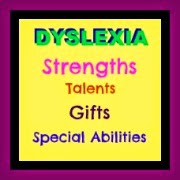
Dyslexia's Strengths, Talents & Gifts

Very often, parents hear only what is negative about their children who struggle to read. At parent/teacher conferences, educators may quickly broach the topic of reading difficulties for a particular child, enumerating a list of challenges that must be addressed. Much less frequently, the discussion will mention the strengths of these children who are struggling readers, especially when these readers have dyslexia.

Did you know that many children and adults with dyslexia have specific strengths and talents? Yes, they do, and we hope to enumerate those here in our blog this week. We also hope that teachers and parents will take a long look at this list and begin recognizing these gifts and special abilities of some of the challenged readers they know and care about in their classrooms and families. If they do, those who struggle to read will improve self-esteem and realize in themselves that they have much more to offer our world than others might think.

The Strengths, Talents and Gifts of Dyslexia

Children and adults with DYSLEXIA are often:

-Creative
-Intuitive
-Persistent
-Empathetic
-Dramatic
-Artistic

In addition, persons with DYSLEXIA frequently possess these strengths:

-Have the ability to see the "big picture" with projects, ideas, etc.
-Possess strong, problem-solving skills
-Have excellent, critical thinking and reasoning skills
-Can think in fully-interactive, 3-dimensional environments
-Demonstrate lateral thinking
-Conceive objects from every possible angle
-Are capable of short periods of high focus
-Are acutely aware of surroundings
-Often inclined to think "outside the box"
-Can see patterns, connections and similarities that others cannot

Do any of these strengths look familiar as you think about your child or student with dyslexia? If not, please take another look. If you see several items that apply to a child you know, help him to channel that strength or further develop those talents. If you do, you will help him move in the direction of improving his self-esteem AND his chances of becoming a reader less challenged.

Sources & Resources:

10 Little-known Advantages of Dyslexia by Marianne Sunderland
This article from the Abundant Life blog lists some of the special talents and abilities of those with dyslexia. Also, a list of careers or vocations that work well for persons with dyslexia is provided.
http://www.mariannesunderland.com/2012/08/10-little-known-advantages-of-dyslexica/

strengths of dyslexia by Aidan Fitzpatrick
Basic list of strengths for persons with dyslexia
http://sourceforge.net/p/dyslexicgift/home/Home/

For more information on customizable reading tools for dyslexia, better focus & attention, please visit:
www.FocusandRead.com Tools for struggling readers of all ages!
www.BrennanInnovators.com Info & support for struggling readers
314-892-3897

Image courtesy of:
Brennan Innovators, LLC at www.focusandread.com

Saturday, January 18, 2014

New Legislation & Research-Based Tools to Help Struggling Readers

At the time of this writing, a growing number of states in the U.S. either have passed or have pending legislation for the appropriate identification and the timely treatment of dyslexia. Unfortunately however, many states, have yet to develop such laws and guidelines. To date, this state-by-state process has been very slow and time-consuming for those whose lives are affected by some form of dyslexia.

On January 10, 2014, however, Congressmen Bill Cassidy, M.D., the Co-Chair of the House Dyslexia Caucus, submitted a resolution (H.Res. 456, 113th Congress) calling for the U.S. House of Representatives to acknowledge the impact of dyslexia and urge schools and educational agencies to address its impact on students. Dr. Cassidy released the following statement:

Dyslexia affects millions of Americans, including many students. We know that many with dyslexia are among our brightest and most successful. If dyslexia is identified in elementary school and the appropriate resources are given to these children, America can produce more teachers, more scientists and more entrepreneurs. This resolution pushes schools and educational agencies to address this challenge and provide evidence-based solutions for dyslexic students.

Rep. Cassidy’s resolution represents a giant step forward for the many who care about dyslexia — parents, teachers, dyslexic children and adults. This Resolution has the potential to impact the country, not just one state. For this reason and others, the effects of this legislation would be historical---and so helpful to many. Science has brought understanding and clarity to dyslexia in recent years. This Resolution by Representative Cassidy now calls for educators and testing agencies to catch up and put this powerful knowledge to work so that the 15-20% of U.S. children with dyslexia, their families and our entire nation may benefit. Please contact your local congressperson to express your opinion on this issue. (See the Find Your Representative link to follow.)

With the potential for passing such a resolution with national implications, there would arise an even greater need for more assistive technology---both low-tech AND high tech solutions for helping students with dyslexia and other reading challenges. However, these solutions will be required to provide evidence of appropriate research and proof of the technologies' successful use in the field. In other words, they will need to be research-based tools, strategies and methods.

On a related matter, the most current statistics from the CDC (Centers for Disease Control and Prevention, November 2013) indicate that approximately 11% of children 4-17 years of age (6.4 million) have been diagnosed with ADHD as of 2011. In addition, the percentage of children with an ADHD diagnosis continues to increase, from 7.8% in 2003 to 9.5% in 2007 and to 11.0% in 2011. All too often, children challenged with the symptoms of ADHD (attention deficit/hyperactivity disorder) experience focus, tracking, comprehension and retention problems when reading. For them as well, the need for appropriate, research-based tools and strategies is growing.

One such group of these research-based tools is called the Reading Focus Cards (Patent 7,565,859). With 2 independent studies of the tools completed, they have been shown to not only improve focus and tracking for students but also measurably improve some students' reading rates, a surprising outcome of the formal and more recent focus study conducted in a Central Missouri high school. In addition, the Reading Focus Cards have shown that they help many readers with ADHD, dyslexia and other issues that impact reading success (Apserger's, autism, stroke/TBI recovery, low vision, Alzheimer's and Parkinson's).

For more detailed information about the 2 independent focus studies of the evidence-based Reading Focus Cards, visit http://www.focusandread.com/page/481317852.

For actual, unsolicited testimonials for the Reading Focus Cards, please visit http://www.focusandread.com/rfc-testimonials.

Sources & Resources

Urge Your Congressional Rep. to Support House Resolution on Dyslexia, #456. Contact Your Representative Now! by Sally Shaywitz, MD & Bennett Shaywitz, MD of The Yale Center for Dyslexia & Creativity
http://dyslexia.yale.edu/CassidyHResJan2014.html

Cassidy Calls For Schools To Help Dyslexic Students---Jan 10, 2014---Press Release (Link to a copy of the Resolution is included here.)
http://cassidy.house.gov/media-center/press-releases/cassidy-calls-for-schools-to-help-dyslexic-students

Find Your Representative (in the U.S. House of Representatives)
http://www.house.gov/representatives/find/

Dyslexia Laws in the USA by Martha Youman & Nancy Mather
http://www.academia.edu/3075019/Dyslexia_Laws_in_the_USA

The International Dyslexia Association
http://www.interdys.org/

Attention-Deficit / Hyperactivity Disorder (ADHD)---Data & Statistics (in the U.S.)
http://www.cdc.gov/ncbddd/adhd/data.html

For information on customizable reading tools for ADHD & other reading challenges:
www.FocusandRead.com Tools for struggling readers of all ages!
www.BrennanInnovators.com Info & support for struggling readers
314-892-3897

Image courtesy of:
Devereaux Cannon and Dave Martucci: http://www.crwflags.com/fotw/flags/us-16.html and
Brennan Innovators, LLC at www.focusandread.com

Saturday, August 31, 2013

Can SQ3R Help Students with ADHD?

As many of our readers may already know, attention deficit hyperactivity disorder (ADHD) and attention deficit disorder (ADD) can begin in childhood and continue into adulthood. ADHD and ADD symptoms, such as impulsiveness, inattentiveness and hyperactivity (with ADHD) can cause problems at home, school, work or in relationships.

As we begin the new school year, we wanted to offer information this week that would be helpful throughout the school year to challenged students, especially to those with ADHD. That is why we have written this article about SQ3R, a method of study that has helped many students in all age groups to read and study more effectively and successfully. This method can be especially beneficial to those students in middle school through high school and college. However, can this method called SQ3R help students with ADHD?

Before we answer that question, it will be helpful to understand just what SQ3R is. SQ3R helps a student build a framework to understand a reading assignment and prepare for a test or other assessment. It is a FREE reading and study strategy formed from its letters: Survey! Question! Read! Recite! Review!

1. SURVEY the chapter BEFORE you read it:
• Look at the title, headings, and subheadings.
• Look at captions under pictures, charts, graphs or maps.
• Look at review questions or teacher-made study guides.
• Pay attention to introductory and concluding paragraphs.
• Look at the summary of the section.

2. QUESTION WHILE you are doing the survey:
• Turn the title, headings, and/or subheadings of the section into questions.
• Read questions at the end of the chapters or after each subheading.
• Ask yourself, "What did my instructor say about this chapter or subject
when it was assigned?"
• Ask yourself, "What do I already know about this subject?"
Note: If it is helpful to you, write out these questions for consideration.
This variation is called SQW3R.

3. As you READ:
• Look for answers to the questions you first raised.
• Answer questions at the beginning or end of chapters or study guides.
• Re-read captions under pictures, graphs, etc.
• Note all the underlined, italicized, bold printed words or phrases.
• Study any graphics (photos, diagrams, etc.)
• Reduce your reading speed for difficult passages.
• Stop and re-read parts which are not clear.
• Read only a section at a time AND recite after each section.

4. RECITE AFTER you read a section:
• Orally ask yourself questions about what you have just read, or summarize, in your own words, what you read
• Take notes from the text but write the information in your own words.
• Underline or highlight important points you've just read.
• Reciting: The more senses you use the more likely you are to remember what you read.
For example: “Triple strength” learning: Seeing, saying, hearing
“Quadruple strength” learning: Seeing, saying, hearing and writing!

5. REVIEW---This is an ongoing process

(Source: Study Guides and Strategies---SQ3R Reading Method http://www.studygs.net/texred2.htm)

The steps involved in the SQ3R method make it an ideal tool to use when attention and memory may be issues for a student. For this reason and others, the SQ3R method may be particularly helpful to students challenged with ADHD because it promotes better understanding and retention of what is read and learned. However, to follow each of these steps, it will take time and patience, two things with which those with ADHD are already challenged. Support from others could go a long way in implementing this method. Parents and teachers as well as tutors and ADD coaches would be doing students a great service by introducing them to this SQ3R method of reading and study as well as providing ongoing support.

Additional SQ3R Resources

Strategic Reading Resource Center---Strategy Toolbox: Combinations---SQ3R
There are several strategies related to questioning. The following sources on this page provide some background on questioning, including the SQ3R Method.
http://www.iptv.org/pd/strategicreading/rws_stratcombo.cfm

Studying More Effectively
SQ3R helps you think about what you want to get from a document, study it in an appropriate level of detail, and remember information well.
http://www.mindtools.com/pages/article/newISS_02.htm
More information at: http://www.mindtools.com/pages/article/newISS_02.htm#sthash.e9n7U6gu.dpuf

Other Related Resources

ADHD: What Is It? (Slideshow)
This online presentation from WebMD defines and describes ADHD, a condition that the National Institute of Mental Health estimates 3% to 5% of U.S. children may have. However, some experts believe the figure could be as high as 10%. Learn more by viewing the presentation via this link.
http://www.webmd.com/add-adhd/childhood-adhd/ss/slideshow-adhd-in-children

For information on customizable reading tools:
www.FocusandRead.com Tools for struggling readers of all ages!
www.BrennanInnovators.com Info & support for struggling readers
314-892-3897

Image courtesy of: Brennan Innovators, LLC: http://www.focusandread.com/blog/post/3537480

Friday, August 23, 2013

Is Your Child Working TOO Hard Just to Read?

Tips & Tools to Help Struggling Readers

Is FOCUSING a struggle for your child or students when they attempt to read? Or is COMPREHENSION more of a problem? Could the root of the issue actually be memory and RETENTION?

Teachers are well aware that from Kindergarten to second grade, children LEARN to READ. However, beginning in third grade, children READ to LEARN. There is a significant difference between the learning objectives for these two stages of a child’s academic development. When children have LEARNED or mastered the skills to READ, they begin to APPLY those reading skills to all other learning. Unfortunately, if a child has not yet mastered the ability to read, all other learning can be quite challenging or even significantly delayed.

As a result, the third grade is very often the time when student reading issues begin to be noticed. If you are a teacher, you may already have some concerns about a few students struggling to read even though it is very early in the new school year. As the parent of a challenged reader, you may have noticed that attempting to read a story or do homework are almost painful for your child---AND you! You may see that your child appears to be working TOO hard just to READ.

What can be done to begin to help a struggling child or student with these focusing and reading challenges? We have gathered a few tips here involving "color" that we think will give you a place to start. We hope they will help your child or students to enjoy much more reading SUCCESS!

Colorful Tips & Tools for Struggling Readers

1. Reading Focus Cards---These customizable tools combine all the features of many other traditional reading tools and more. The Reading Focus Cards (Patent 7,565,759) isolate 1 to 2 lines of text on a page (depending on font size) AND block out more surrounding text than any other tool available. In addition, these tools allow the reader to change white page backgrounds with a chosen colored filter (included in each package). Because of these features, the Reading Focus Cards can be especially helpful for:

-ADHD
-Dyslexia
-Convergence insufficiency
-Autism
-Low vision
-Stroke recovery or TBI issues
-Other conditions that impact reading success.

The inexpensive Reading Focus Cards can also be used with e-readers like Kindles, Nooks, etc. (Model #001-Shorter) and e-tablets like iPads, Android tablets, etc. (Model #002-Longer) to promote even more focus and concentration. For more information about these unique reading tools, visit http://www.focusandread.com/products.

2. Colored Paper---When reading printed media such as worksheets and other documents, consider requesting that they be copied on colored paper instead of the traditional white paper. Your local school or office supply store will usually be able to provide a ream of several colors to try in one package. Try a DIFFERENT color of paper each week until the BEST color for reading is determined. This color will promote more FOCUS and EYE COMFORT than the other colors. As a result, not only will the individual reader experience more focus, but better comprehension and retention will also be possible.

3. Colored Overlays---Try placing a colored yet transparent plastic sheet over a page of text to be read. These transparent but colored plastic sheets can be purchased at some office or art supply stores. Consider trying a variety of different colored sheets, one color at a time with a resting interval between each color’s trial. There is a good possibility that one particular sheet color may provide more focus and eye comfort for the reader than other colored sheets. Experiment with pastel colors as well as bright ones. Introducing the best or most helpful color can positively impact the appearance of the printed text for a reader with symptoms of dyslexia or other reading challenges. With the use of the most appropriate color, an individual reader may report that the letters “stopped moving”, “waving out” or “shadowing” on the page of text.

These three tips employ color to change white backgrounds on pages of text. A white background can cause what is often called visual stress for some readers. This can be especially troublesome when the text on the page is black. The contrast between the text and the background can be too stark. As a result, such readers often struggle with focusing, which also affects attention and comprehension. These visually-stressed readers can also experience fatigue much sooner, and their retention is often significantly impacted.

If you try the strategies described above here, and the reading problems persist, consider visiting (or suggesting a visit to) a developmental optometrist. This medical professional can test, evaluate, diagnose and treat children, teens and adults with vision-related reading challenges. Please keep in mind that an individual of any age can have 20/20 vision (determined by a traditional optometrist or optician) and yet still have a vision-related reading challenge. To locate such a developmental optometrist in your area, please visit the website of the College of Optometrists in Vision Development (COVD) at http://covd.org.

Sources

Press Release - Patented ADHD Reading Tools Can Help ALL Kinds of Readers
http://www.pressreleasepoint.com/patented-adhd-reading-tools-can-help-all-kinds-readers

For information on customizable reading tools:
www.FocusandRead.com Tools for struggling readers of all ages!
www.BrennanInnovators.com Info & support for struggling readers
314-892-3897

Image courtesy of: Brennan Innovators, LLC: http://www.focusandread.com/blog/post/3537480

Saturday, September 1, 2012

ADHD Tools & Resources for This School Year!

It’s Labor Day Weekend, and at its end, students will begin a new school year, if they have not already done so. With this new year, there will be new issues for the families of children and teens challenged with AD/HD.

We already know that the rate or prevalence of AD/HD is increasing. We also know there is technology to help the children and adults affected. However, what about the availability of reliable information, resources and other tools to help manage this condition? Also, how does one know which information is really current, credible and potentially beneficial to those who greatly need it?

Once again, we are here to help. We have assembled the best and most up-to-date information to assist parents, teachers, and other adults needing this critical information that can make a real difference in the life someone challenged with AD/HD.

We hope you find these tools, resources and supportive organizations to be beneficial for a child, student or adult you know with an attention deficit disorder.

ADHD Tools to Help with Daily Life

FREE Graphic Organizer Templates-Use this collection of visual organizers to structure writing projects, to help in problem solving, decision making, studying, planning research and brainstorming. Select a specific graphic organizer from the list to suit the needs of a particular task, job, or other project.
http://www.eduplace.com/graphicorganizer/

TeachTimer-Time-Management Tool
http://orton-gillingham.com/frmShoppingCatalog.aspx?intCategoryID=17&intProductID=207

The MotivAider-An ingeniously simple electronic device that enables people of all ages to stay focused and change behavior and habits quickly, easily and privately. (A 30-second flash video is available at link to follow here.)
http://habitchange.com/

The “Invisible Clock”-Reminder device for setting up to 12 reminders per day. Choose silent vibrate or different beeps.
http://www.thrivewithadd.com/products/useful_resources109

TIME SENSE EXERCISE©-A simple pen and paper tool that can help individuals use time more effectively.
http://www.thrivewithadd.com/products/useful_resources109

Reading Focus Cards (Patent 7,565,759)-Customizable and sensory-appealing solutions for struggling readers of all ages. Especially helpful for children and adults with ADHD, dyslexia, autism, as well as low vision, stroke recovery and TBI issues.
www.FocusandRead.com/products

ADHD Resources for Help & Support

CHADD-The leading, non-profit national organization serving people affected by AD/HD
http://www.chadd.org/?gclid=CK344_H-krICFYkWMgodeXUAiQ


National Resource Center for AD/HD (A Program of CHADD)-The nation's clearinghouse for science-based information about all aspects of attention-deficit/hyperactivity disorder (ADHD)
http://www.help4adhd.org/

National Institute of Mental Health (NIMH)-Information such as symptoms, causes, methods of diagnosis, etc. provided on this site. A FREE copy of a detailed booklet describing ADHD symptoms, causes, and treatments, with information on getting help and coping) is provided through this link (FREE download OR hardcopy available.)
http://www.nimh.nih.gov/health/publications/attention-deficit-hyperactivity-disorder/complete-index.shtml

Centers for Disease Control and Prevention (CDC)-This official site offers resources, statistics, and other information about AD/HD.
http://www.cdc.gov/Features/adhdresources/

ADDitude.com-Site with many articles, information, and resources (printables and downloadables, too) realted to AD/HD (official site for ADDitude Magazine)
www.additudemag.com

The ADDitude Directory-A complete resource for living with AD/HD & learning disabilities
(provided by ADDitude Magazine)
http://directory.additudemag.com/

For more information:
www.FocusandRead.com Tools for struggling readers of all ages!
www.BrennanInnovators.com Info & support for struggling readers
314-892-3897

Clip art courtesy of: http://www.ace-clipart.com/school-clipart-03.html